
October 1, 2026
Florida builders, contractors, architects, and commercial project teams have a date to watch: December 31, 2026.
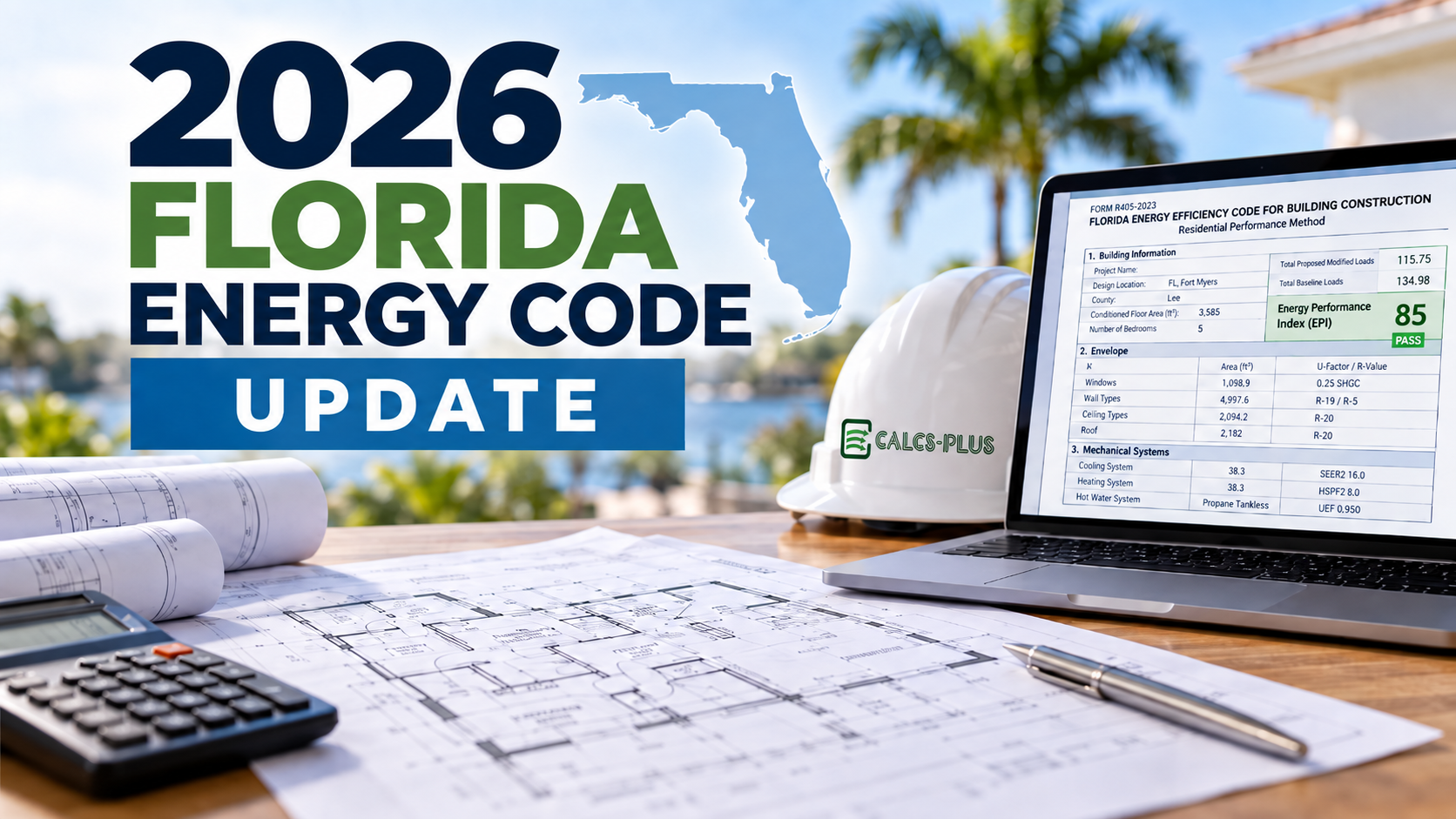
That is when the 2026 / 9th Edition Florida Building Code is scheduled to take effect.
While that may sound far away, anyone who has dealt with permitting, plan review, energy documentation, or inspection deadlines knows the truth: code changes have a way of showing up right when a project is already under pressure.
The 9th Edition is not just a paperwork update. The state's published analysis of the 2026 Florida Building Code, Energy Conservation compares the current 8th Edition with the upcoming 9th Edition and notes that the new version includes changes from the 2024 International Energy Conservation Code as well as Florida Building Commission-approved modifications.
For builders and project teams, the takeaway is simple:
Now is the time to tighten up HVAC calculations, energy code documentation, duct design, and mechanical plan coordination. Not after a permit reviewer flags a problem.
Why This Matters for Florida Builders
Florida projects already operate in a demanding environment. Heat, humidity, energy performance, ventilation, airtightness, and mechanical system design all matter. When code requirements shift, weak documentation becomes a bigger liability.
That can mean:
- Delayed permit approvals
- Additional plan review comments
- Resubmittals
- Confusion between design teams and contractors
- Inspection issues
- HVAC systems that are oversized, undersized, or poorly matched to the building
- Comfort and humidity complaints after occupancy
For builders and commercial project teams, these are not small problems. They affect timelines, budgets, client satisfaction, and reputation.
Energy Code Changes Put More Pressure on Documentation
The state's energy-code analysis is designed to help identify differences between the current 8th Edition and the upcoming 9th Edition. It specifically states that the analysis is intended to help users transition to the new code, while also warning that it is not a replacement for the actual code books.
That distinction matters.
A quick skim of a summary is not the same as having the right project-specific documentation. Builders still need accurate calculations, reports, and mechanical design support that align with the actual project scope.
For residential projects, that may include:
- Manual J load calculations
- Energy code calculations
- Duct design
- Blower door testing
- Duct leakage testing
For commercial projects, that may include:
- HVAC load calculations
- Form C405 energy documentation
- HVAC duct/system design
- Signed and sealed mechanical plans when required
Commercial Teams Should Pay Close Attention
Commercial projects are especially vulnerable to documentation gaps because there are more moving parts: architects, engineers, contractors, owners, tenants, equipment vendors, and local plan reviewers.
The 2026 commercial energy-code analysis includes new or revised terminology related to items such as:
- Construction documents
- Demand control kitchen ventilation
- Demand responsive control
- DX dedicated outdoor air systems
- Energy use intensity
- Energy storage systems
- Other energy-related concepts
That does not mean every project will be affected in the same way.
But it does mean commercial teams should stop treating HVAC and energy documentation as a last-minute permit packet item.
The better approach is to review HVAC loads, ventilation assumptions, duct layouts, equipment selection, and energy compliance requirements earlier in the project.
Residential Builders Should Also Prepare
The residential side is also changing.
Florida's published residential analysis states that the 9th Edition uses the current 8th Edition as the base code and incorporates updates from the 2024 International Residential Code, along with Florida-specific amendments.
For residential builders, remodelers, and HVAC contractors, this makes early coordination even more important.
Any project involving:
- New construction
- Additions
- Remodels
- Altered layouts
- Insulation changes
- Window changes
- Mechanical system changes
can affect HVAC sizing and energy performance.
In Florida, getting that wrong can lead to more than inefficient operation. It can create comfort problems, humidity issues, failed inspections, and frustrated homeowners.
The Risk of Waiting for Permit Submission
Many project teams wait too long to address HVAC calculations and energy documentation.
That may work when the project is simple and everyone is working from clean plans. But as code expectations evolve, waiting creates risk.
As the time of permit submission draws closer, changes become harder and more expensive.
Major delays can result if the HVAC load calculation does not match the plans, if the duct design is incomplete, or if energy documentation does not align with the project scope.
That is why builders should start asking these questions earlier:
- Are the HVAC load calculations based on the latest plans?
- Has the equipment been selected based on proper sizing, not guesswork?
- Does the duct layout support the design intent?
- Are energy code calculations complete and consistent with the construction documents?
- Will blower door or duct leakage testing be needed?
- Does the project require signed and sealed mechanical plans?
- Has the team planned for code changes that may affect permits issued near or after December 31, 2026?
Calcs-Plus' Take: Code Changes Reward Prepared Teams
The 2026 code transition should not be viewed as a panic moment.
It should be viewed as a planning opportunity.
Builders, contractors, architects, developers, and commercial owners who get their HVAC and energy documentation in order early will be in a stronger position when the new code takes effect.
Those who wait until the last minute may face avoidable friction during permitting and inspection.
Calcs-Plus helps Florida project teams move from plans to permits with accurate, code-conscious HVAC load calculations, energy code calculations, duct/system design, blower door testing, duct leakage testing, and engineering-backed mechanical documentation.
As Florida moves toward the 9th Edition Building Code, the smartest move is not to guess.
It is to prepare.
Need HVAC or Energy Code Documentation for an Upcoming Florida Project?
Calcs-Plus supports residential and commercial projects across Florida with permit-ready HVAC calculations, energy code reports, duct/system design, blower door testing, duct leakage testing, and signed/sealed mechanical plans when needed.
If your project is headed for permitting in late 2026 or 2027, now is the time to review your documentation strategy.