
February 11, 2026
The Role of Blower Door Testing in Building Science
Blower door testing has become a cornerstone of modern building science, offering valuable insight into how a building truly performs. While many homeowners and builders associate a blower door test with energy code compliance or the final step required to obtain a Certificate of Occupancy, its benefits extend far beyond meeting minimum requirements.
Blower door testing provides measurable data about air leakage, which directly impacts energy use, moisture movement, comfort, and long-term durability. When used correctly, the results inform better decisions about air sealing, ventilation, and HVAC system performance.
What Is a Blower Door Test?
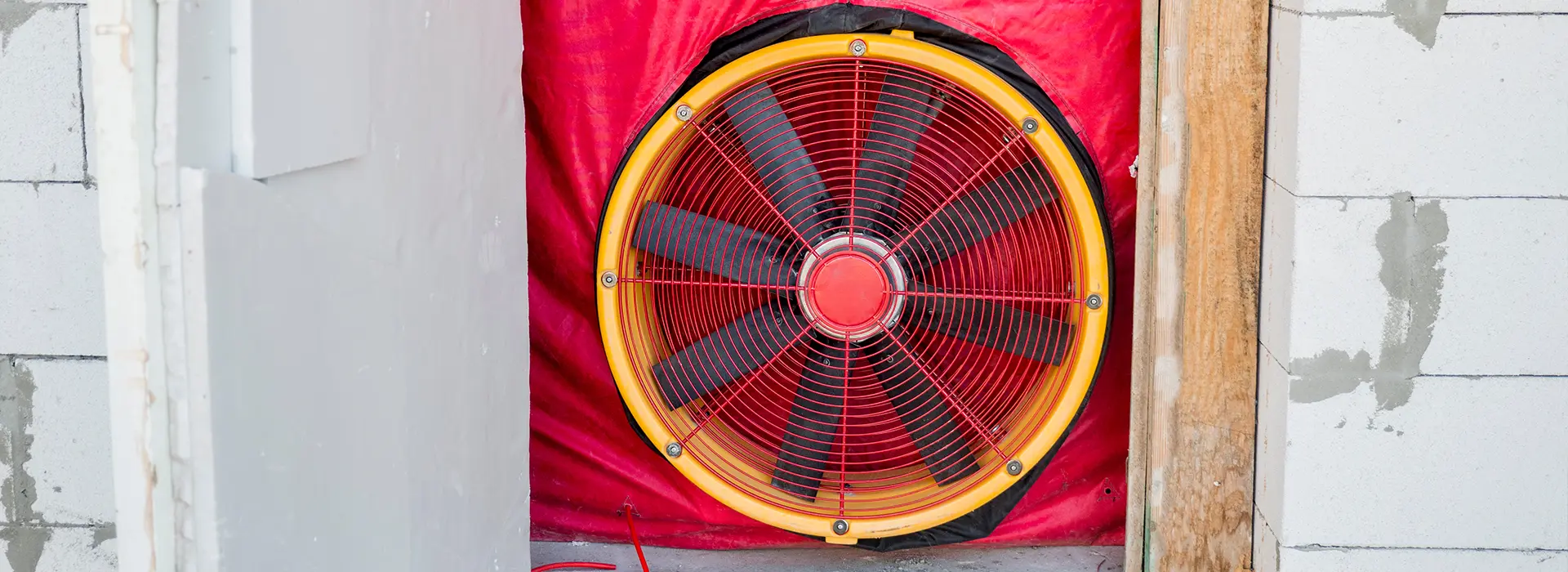
A blower door test measures how much air leaks in and out of a building. During the test, a powerful fan is temporarily installed in an exterior doorway to pressurize or depressurize the structure. This controlled pressure difference allows technicians to identify where outside air is entering or escaping the building envelope.
For homeowners wondering what to expect during a blower door test, the process is non-invasive and typically takes less than an hour. In Florida, blower door testing is commonly required for new construction and certain renovations as part of energy code verification and permitting.
Blower Door Testing as a Building Science Tool
Within building science, blower door testing provides critical information about the integrity of the building envelope. Air leakage directly impacts energy efficiency, moisture control, and durability. Uncontrolled airflow can transport humidity into wall cavities, leading to microbial growth or material degradation over time.
As part of comprehensive building envelope diagnostics, blower door testing helps professionals identify whether the building enclosure is working as a system or whether gaps between components are undermining performance.
Improving Energy Efficiency Through Air Infiltration Testing
One of the most important benefits of air infiltration testing is its ability to reveal where conditioned air is being lost. When conditioned air escapes through gaps and cracks, HVAC systems must work harder to maintain comfort. Over time, this increases energy consumption and accelerates equipment wear.
By identifying leakage pathways, blower door testing can lead to improved energy efficiency when paired with targeted air sealing. A proper air sealing evaluation ensures improvements are made in the most impactful areas, leading to lower energy bills and better temperature control throughout the home.
Indoor Air Quality and Comfort Benefits
Air leakage doesn’t just waste energy; it also affects indoor air quality and occupant comfort. Uncontrolled airflow can pull in dust, allergens, outdoor pollutants, and excess moisture. A blower door test helps identify these leakage pathways so they can be addressed and properly sealed or managed.
Improved airtightness allows ventilation systems to operate as designed, supporting balanced airflow and healthier indoor conditions. Blower door testing also supports HVAC performance by ensuring systems are not compensating for excessive leakage, which can lead to uneven temperatures and discomfort.
Common Pitfalls in Blower Door Testing
While blower door testing is highly effective, its accuracy depends on proper execution. One common mistake is testing without preparing the building correctly, such as leaving dampers open or failing to isolate combustion appliances.
Another pitfall is focusing solely on achieving a low leakage number without considering the building’s design and ventilation needs. A tighter building is not always better unless fresh air requirements are properly addressed. Blower door testing should be part of a broader evaluation of how the building functions as a system, not a standalone metric.
Cost, Compliance, and Practical Considerations
The cost of blower door testing can vary based on building size, complexity, and whether additional diagnostics are required. While it is often viewed as a compliance item, the information gained can help prevent future comfort complaints, moisture problems, and inefficient system operation.
In Florida, blower door testing is frequently required for new homes and certain renovations to demonstrate compliance with energy codes. Beyond meeting code, professional testing provides clear, documented data that supports informed decisions and practical actions during construction and inspection.
Building Smarter With Blower Door Testing
Blower door testing is an essential tool in building science because it reveals how a building truly performs, providing insight that goes far beyond energy code compliance. By identifying air leakage pathways, improving indoor air quality, and supporting efficient HVAC operation, it helps create buildings that are more comfortable, durable, and energy efficient.
If you’re building a new home, planning renovations, or need to meet Florida’s blower door building code requirements, partnering with an experienced professional makes all the difference. Calcs-Plus offers accurate, code-compliant blower door testing backed by decades of building science expertise. Contact Calcs-Plus today to ensure your project is tested, documented, and optimized for long-term performance and compliance.